
What Is an End Mill? Types, Structure, Sizes & Flutes Explained
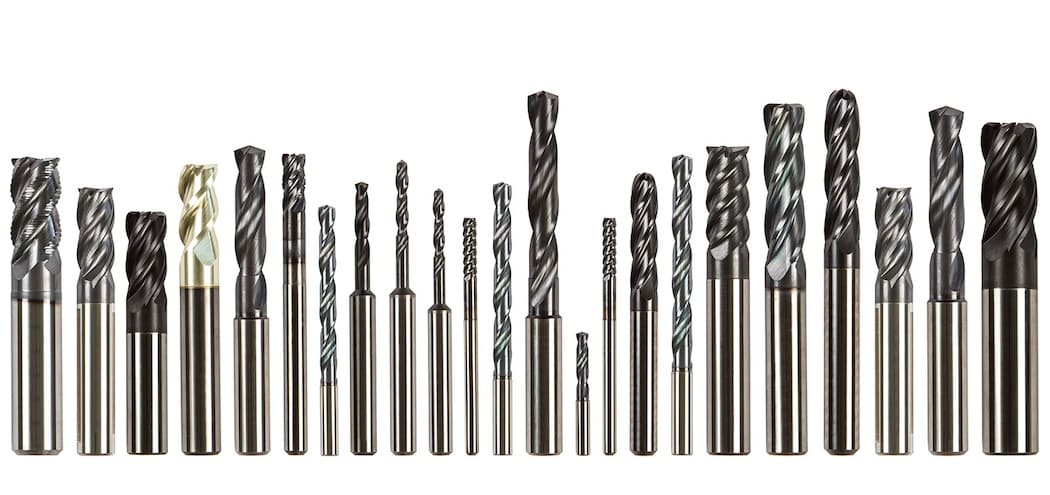
Learning end mill types and basics helps every CNC operator choose the right cutting tool for milling tasks. An end mill ranks as one of the most essential cutting tools for CNC milling machines and machining centers. Unlike ordinary drills, it cuts through both side edges and bottom edges. Manufacturers widely use it in mold making, automotive parts, electronic components, medical equipment and aerospace manufacturing.
End mills handle multiple machining processes, including slotting, side milling, profile machining, cavity grooving and curved surface contouring. The right end mill directly boosts machining accuracy, surface finish and production efficiency.
Basic Classification and Basic Structure of End Mills
We divide end mills into solid end mills and indexable end mills by overall structure. Mastering these basic end mill basics helps you pick the right tool fast.
Solid End Mill Structure Features
Makers produce the whole tool from one integrated material. Users can regrind it repeatedly after cutting edges wear out to extend service life. It delivers high rigidity and stable machining precision, ideal for high-precision finishing work.
Indexable End Mill Basic Principles
It uses a tool holder with replaceable carbide inserts. Operators do not need full regrinding once edges get damaged. They only replace the inserts to save time and cut tool costs. Factories mostly apply it for heavy roughing and large-scale processing tasks.
Main End Mill Types and Their Basic Applications
- Flat End Mill: It features a square corner with flat bottom; workers use it for plane processing and right-angle groove machining.
- Ball Nose End Mill: It has a spherical round head; technicians mainly apply it for 3D curved surface and mold contour processing.
- Corner Radius End Mill: It adopts rounded transition at the corner to strengthen edge strength and avoid chipping; it works perfectly for hard steel and long-time cutting.
- Roughing End Mill: It uses a wave-shaped flute design for great chip evacuation; operators rely on it for rapid roughing material removal.
- Tapered End Mill: It owns a tapered cutting part; workers apply it to inclined surface and tapered hole processing.
End Mill Basic Size Parameters and Length Selection
The key size parameters of an end mill cover tool diameter and cutting length.
Tool diameter decides the width of the machining groove and matching workpiece size. Longer cutting length reaches deeper processing ranges but reduces rigidity and easily triggers tool vibration.
Short end mills provide better rigidity and higher precision. Users apply long end mills for deep cavity processing and lower cutting parameters to avoid tool breakage.
End Mill Flute Count Basics and Usage Differences
2-Flute & 3-Flute End Mill Basic Advantages
They feature large chip holding space and excellent chip evacuation performance. Machinists prefer them for slotting and roughing aluminum, copper and other non-ferrous metals.
4-Flute & Multi-Flute End Mill Basic Characteristics
They deliver higher tool rigidity and smoother cutting surfaces, suitable for side finishing and hard material processing. More flutes create smaller chip space, so we do not recommend them for deep slotting.
Odd Number Flute Basic Design Benefits
3-flute and 5-flute end mills effectively reduce cutting resonance, stabilize machining and improve surface finish.
Conclusion
Understanding the basic structure, classification, size standard and flute characteristics of end mills lays the foundation for reasonable tool selection. Match the correct end mill with workpiece material and machining technology, and you will greatly lift machining efficiency and tool service life.
Recommended reading: carbide end mill vs HSS end mill

 English
 Español
 العربية
 Русский
 Français
 Português do Brasil
 简体中文
简体中文