
Why Cleaning Your Buffing Wheel Really Matters
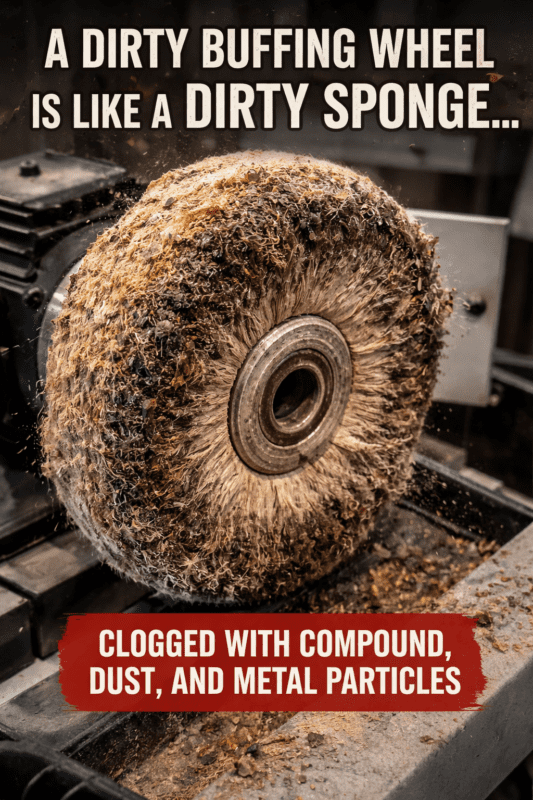
Think of your buffing wheel like a sponge—it soaks up debris, compounds, and tiny bits of metal, wood, or other materials. If you never clean it:
- Your finish looks uneven, dull, or scratched
- Cross-contamination can happen, mixing compounds and ruining colors
- The wheel wears out faster
- And honestly, using a dirty wheel can be unsafe
Regular cleaning keeps your wheel performing like new and protects your work. It’s not just maintenance—it’s your secret to a flawless shine.
Tools You’ll Actually Need
Before you start, gather these essentials:
- Buffing wheel rake or crepe stick – fluffs fibers and removes debris
- Stiff-bristled brush – clears stuck-on grit
- Compressed air – optional, but great for microfiber or delicate wheels
- Cleaning solvent – match it to your compound; some compounds need alcohol-based, others mineral spirits
- Clean cloths, gloves, safety glasses – because safety is always number one
Having all this ready before you start saves time and prevents mistakes.
How Often Should You Clean Your Buffing Wheel?
This depends on how much you use your wheel and what you’re polishing:
- Light users – every 2–3 months
- Moderate users – once a month
- Heavy users – weekly or after every big project
Also, pay attention: if your wheel feels harder, looks dirty, or your polish is uneven, it’s cleaning time. Regular maintenance prevents major buildup that takes hours to fix.
Step-by-Step Cleaning Process (The Safe Way)
Here’s the nitty-gritty on how to clean a buffing wheel:
- Safety first – gloves, glasses, maybe even a mask
- Remove loose debris – spin the wheel slowly, gently press the rake to fluff fibers and pull out dirt
- Brush it out – turn it off and use a stiff brush to remove stubborn particles
- Apply cleaning solvent – dab a little on a cloth, rub gently on the wheel surface; don’t soak it
- Rinse & dry – if you used solvent, rinse lightly with water, air dry completely
- Fluff again – use the rake one last time; your wheel should feel soft and even
Pro tips for this step:
- Always clean at low speed or when wheel is off; spinning too fast can be dangerous
- Use circular motions with the brush, not back-and-forth, to avoid fiber damage
- Only a small amount of solvent is needed; too much can break down fibers
Cleaning Different Types of Buffing Wheels
Not all wheels are equal. Cleaning methods vary by material:
- Cotton wheels – easy; just follow the basic cleaning process
- Sisal wheels – tougher; wire brush works fine, but be careful not to fray edges
- Microfiber wheels – delicate; mostly compressed air and soft brush; solvent only if necessary
- Wool wheels – like cotton, but let them dry completely to avoid matting
Knowing your wheel type is half the battle. It also helps if you’re searching “how do you clean a buffing wheel” because type-specific tips make a huge difference.
Preventive Measures: Keep Your Wheel Cleaner Longer
Cleaning is great, but prevention saves even more time. Here’s how:
- Use separate wheels for different compounds or materials
- Store wheels in dust-free, dry conditions
- Clean your workpiece before buffing to reduce debris
- Don’t over-apply compounds; less is more
Follow these steps, and your wheel stays cleaner longer, meaning fewer deep cleans and better results every time.
Common Mistakes to Avoid
Even experienced polishers mess up sometimes. Avoid these:
- Using too much force while cleaning – can break fibers
- Cleaning while the wheel is spinning fast – dangerous!
- Wrong solvents – some chemicals degrade the wheel
- Not letting it dry completely – moisture can ruin fibers
A little care goes a long way.
Signs You Might Need a New Buffing Wheel
Eventually, even the best wheels wear out. Look for:
- Bald spots or frayed edges
- Persistent odor or discoloration
- Reduced shine despite proper cleaning
If you notice these, it’s time to invest in a new wheel to keep your work top-notch.
Pro Maintenance Tricks
Want to polish like a pro? Try these:
- Rotate wheels regularly to wear them evenly
- Color-code wheels for different compounds to avoid cross-contamination
- Store in a cool, dry place, away from sunlight
- Inspect wheels before each use for damage or buildup
These small habits keep your wheel performing consistently and make polishing faster and easier.
How Proper Maintenance Impacts Your Work
A clean, well-maintained wheel isn’t just about the tool—it’s about your results:
- Consistent, flawless finish
- Fewer scratches and swirl marks
- Faster, more efficient work
- Professional appearance every time
Investing time in maintenance pays off in every project.
Conclusion: Shine Like a Pro
So there you have it—your complete guide on how do you clean a buffing wheel. Gather your tools, follow the steps, care for your wheel, and you’ll see the difference immediately. Clean wheels, better shine, longer life, and happier polishing sessions. Don’t skip the maintenance—your work deserves it.

 English
 Español
 العربية
 Русский
 Français
 Português do Brasil
 简体中文
简体中文