
“Silent saw blade” or “quiet saw blade” is a common marketing term in cutting tool industry. Experienced workers know fully silent blades cannot exist with current technology.
This goal may come true with future technical upgrades.
Noise is inevitable once a saw blade cuts materials. Different blades also produce different sounds.
Aluminum cutting creates sharp high-frequency noise. Woodworking blades make loud, deafening noise instead.
Noise troubles both blade makers and users. Long exposure to loud noise also harms operators’ health.
Many firms and labs keep working on noise solutions. Two popular upgrades are noise-reduction grooves and multi-layer blade bodies.
Before new tech goes mainstream, you can control noise with three easy steps.
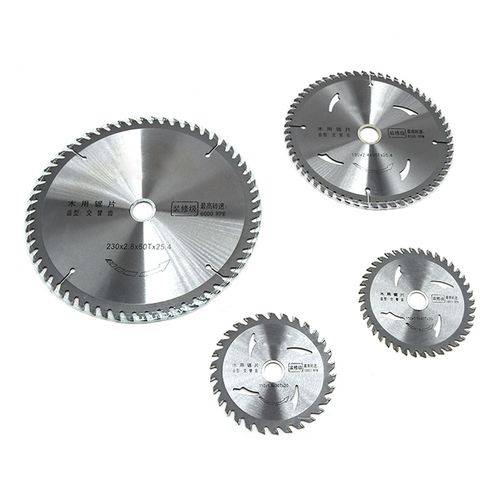
Besides, the noise volume and perceived discomfort vary from blade to blade. Take aluminum cutting as an example. When a saw blade cuts aluminum profiles, the high-frequency noise is particularly harsh to the ears.
For woodworking saw blades, the noise produced during wood cutting is less shrill than that from aluminum cutting blades, yet its high decibel level is deafening.
Before groundbreaking breakthroughs are made in related technologies, noise will remain a persistent problem for both saw blade manufacturers and end users. Moreover, prolonged exposure to high-noise working environments poses health hazards to machine operators.
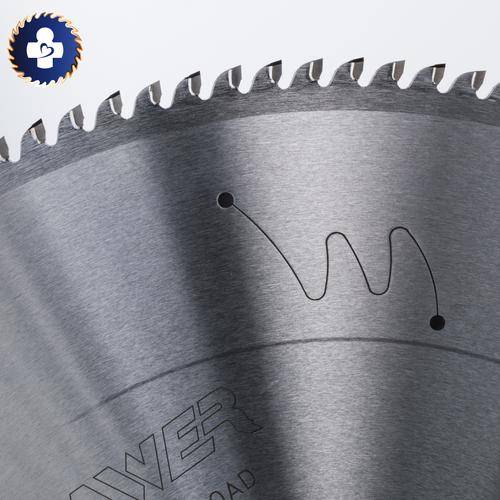
Fortunately, although we cannot fully eliminate saw blade noise for now, enterprises and research institutions keep exploring effective solutions. Current major improvements include noise-reduction grooves on blade bodies and multi-layer structural design for blade substrates.
Before these advanced technologies are widely popularized, the following three practical methods can effectively control saw blade noise in daily use.
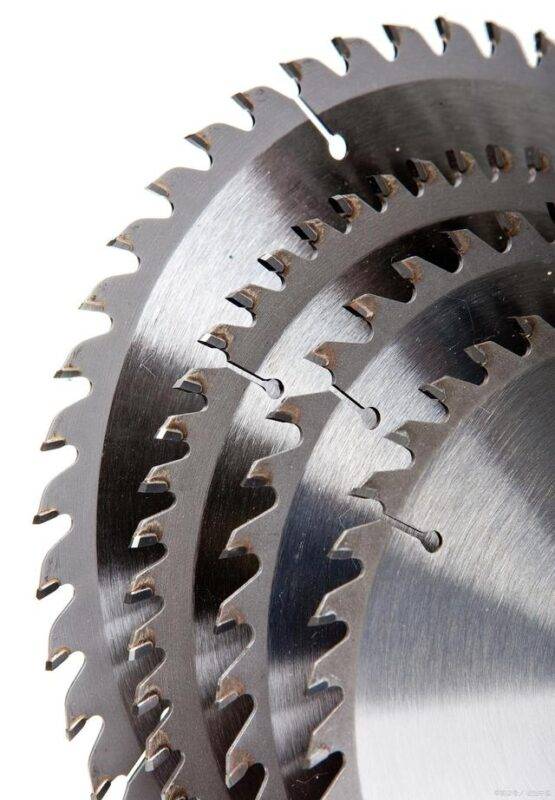
How to Reduce Saw Blade Noise
Method 1: Install Barriers to Block Noise Transmission
Sound is generated by vibration and travels through solid, liquid and gaseous media to reach human ears.
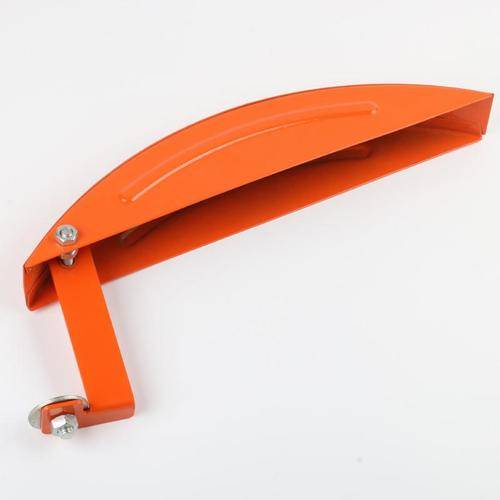
To cut down cutting noise, we can optimize the sound transmission path. The most effective solution is to equip cutting machines with fully enclosed safety guards, which weakens sound conduction and lowers noise exposure.
For profile processing enterprises aiming to protect workers’ health, it is advisable to prioritize cutting machines fitted with fully enclosed guards during procurement.
Such enclosures not only greatly reduce operating noise, but also prevent flying aluminum chips, effectively improving overall workplace safety.
Method 2: Adopt Advanced Noise-Reduction Technologies
As mentioned above, multi-layer blade substrate design can significantly reduce noise, and this technology has been applied on a small scale at present.
High-end diamond saw blades manufactured in Germany have adopted this new structure. With decreasing technical costs, large-scale application is only a matter of time.
Nevertheless, saw blades made with this technology come at a high price — one such premium blade costs as much as dozens of ordinary carbide-tipped saw blades. If you demand superior cutting quality and attach great importance to staff health, these blades are well worth considering.

Method 3: Proper Cooling and Lubrication
Cutting grooves on blade bodies are a widely used classic design to lower noise and improve operational stability.
Apart from choosing saw blades with built-in noise-reduction grooves, regular cooling and lubrication also help control noise.
Poor heat dissipation during high-speed operation will cause blade runout and severe vibration, which dramatically amplifies noise.
Proper cooling and lubrication is a mature solution to avoid excessive noise caused by blade runout. The optimal approach is to use a minimum quantity lubrication (MQL) system together with dedicated cutting oil.
The system sprays atomized cutting oil onto the blade to dissipate heat rapidly and maintain stable operation. With an oil consumption of merely 0.05 milliliters per second, it also greatly cuts operational costs for enterprises.
To sum up, noise control is an unavoidable issue for all profile processing factories. Proper management of this problem indirectly determines an enterprise’s production efficiency and workplace safety standards.

 English
 Español
 العربية
 Русский
 Français
 Português do Brasil
 简体中文
简体中文